
Jaywalking Accident Lawyer: Can You Still Recover Compensation After Being Hit Outside a Crosswalk?
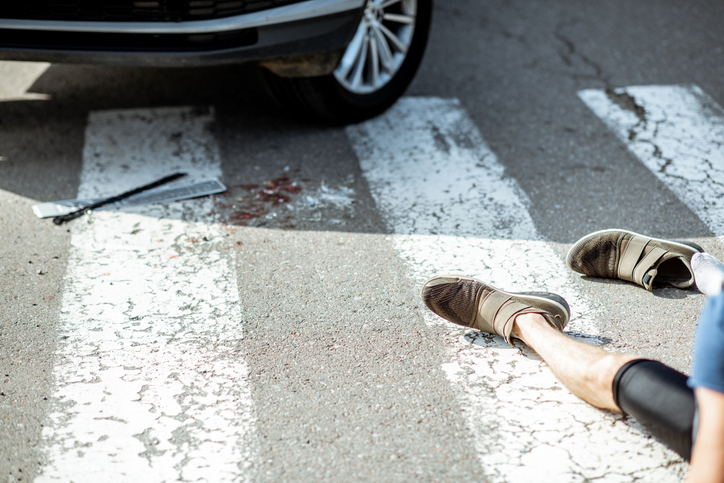
Can you still recover compensation if you were hit by a vehicle while jaywalking, and how can a jaywalking accident lawyer help?
Being struck by a vehicle while crossing outside a crosswalk is terrifying and often results in serious injuries. Many injured pedestrians mistakenly believe jaywalking automatically disqualifies them from recovering compensation. Under Nevada law, this assumption is often incorrect. Even when pedestrians
cross illegally, drivers still owe them a duty to exercise reasonable care and avoid collisions when possible.
A jaywalking accident lawyer helps injured pedestrians investigate crashes, challenge unfair fault assignments, prove driver negligence, and pursue compensation under Nevada's comparative negligence laws,even when jaywalking occurred.
Understanding Nevada's Jaywalking Laws
Under NRS 484B.287, jaywalking is illegal in Nevada. The statute requires pedestrians to:
- Cross only at marked crosswalks or unmarked crosswalks at intersections
- Yield right-of-way to vehicles when crossing outside designated areas
- Obey pedestrian traffic signals and control devices
- Avoid diagonal crossing at intersections unless authorized by signals
Violating these provisions constitutes a civil infraction carrying fines up to $100 (typically around $163 in Las Vegas). However, receiving a jaywalking citation doesn't automatically eliminate your right to compensation if a driver's negligence contributed to your injuries.
Can You Recover Compensation Despite Jaywalking?
Yes. Nevada follows modified comparative negligence under NRS 41.141, allowing injury victims to recover damages even when partially at fault,provided their responsibility doesn't exceed 50%.
How comparative negligence works:
If you're found 30% at fault for jaywalking and the driver is 70% at fault for speeding or distracted driving, you can still recover 70% of your damages. For example, if your total damages equal $100,000, you would receive $70,000 after the 30% reduction.
However, if you're determined to be 51% or more at fault, Nevada law bars recovery entirely. This makes legal representation critical for challenging fault assessments and proving driver negligence.
Driver Negligence Still Matters in Jaywalking Cases
Even when pedestrians jaywalk, drivers remain legally obligated to exercise reasonable care. Nevada law requires drivers to avoid pedestrians, when possible, regardless of where crossing occurs. Driver negligence that commonly contributes to jaywalking accidents includes:
- Excessive Speed: Speeding reduces reaction time and increases stopping distances, making it impossible to avoid pedestrians even when drivers have clear sight lines.
- Distracted Driving: Texting, phone use, eating, or other distractions prevent drivers from seeing pedestrians in time to react.
- Impaired Driving: Alcohol or drug impairment significantly reduces driver awareness, judgment, and reaction capabilities.
- Failure to Maintain Proper Lookout: Drivers must actively scan for pedestrians, cyclists, and other hazards, not just focus straight ahead.
- Poor Lighting Conditions: Failing to use headlights appropriately or driving too fast for visibility conditions demonstrates negligence.
- Violating Traffic Laws: Running red lights, illegal turns, or other traffic violations that contribute to collisions establish driver fault.
When drivers violate these duties, they share significant responsibility for accidents, even when pedestrians were jaywalking.
How Jaywalking Accident Lawyers Protect Your Rights
Comprehensive Investigation
Experienced attorneys conduct thorough accident investigations including:
Evidence Collection: Securing police reports, accident scene photographs, vehicle damage documentation, skid mark measurements, and road condition evidence.
Surveillance and Camera Footage: Obtaining traffic camera recordings, business security footage, dashcam videos, and other visual evidence showing exactly how accidents occurred.
Witness Interviews: Identifying and interviewing witnesses who can testify about driver behavior, speed, distractions, and whether drivers could have avoided collisions.
Phone Record Analysis: Subpoenaing driver phone records to prove texting or phone use at accident times.
Expert Consultation: Working with accident reconstruction specialists who analyze physical evidence, calculate speeds, and determine fault percentages.
Challenging Unfair Fault Assignments
Insurance companies routinely attempt to assign maximum fault to jaywalking pedestrians, hoping to minimize or eliminate their payout obligations. Attorneys counter these tactics by:
Demonstrating Driver Negligence: Presenting evidence of speeding, distraction, impairment, or other violations that significantly contributed to crashes.
Establishing Preventability: Proving drivers had opportunities to avoid collisions through proper attention, speed control, or evasive action.
Highlighting Shared Roadway Duties: Emphasizing that drivers must exercise care to avoid pedestrians regardless of crossing location.
Analyzing Visibility and Reaction Time: Using expert testimony to show whether reasonable drivers could have seen and avoided pedestrians.
Documenting Comprehensive Damages
Jaywalking accidents often cause serious injuries requiring extensive medical treatment. Attorneys ensure complete damage documentation including:
Economic Damages:
- Emergency medical treatment and hospitalization
- Surgeries, procedures, and rehabilitation
- Future medical care needs and costs
- Lost wages during recovery
- Reduced earning capacity from permanent injuries
- Medical equipment and assistive devices
Non-Economic Damages:
- Physical pain and suffering
- Emotional distress and trauma
- Loss of enjoyment of life
- Permanent disability impacts
- Scarring and disfigurement
Factors Affecting Liability in Jaywalking Cases
Courts consider numerous factors when determining fault percentages, including: Driver Behavior:
- Speed at collision time
- Evidence of distraction or impairment
- Compliance with traffic laws
- Whether driver attempted to avoid pedestrian
Pedestrian Actions:
- Where crossing occurred relative to crosswalks
- Whether pedestrians looked for traffic
- Clothing visibility and lighting conditions
- Pedestrian's speed and predictability
Environmental Conditions:
- Time of day and lighting
- Weather affecting visibility
- Road design and sight line obstructions
- Presence or absence of sidewalks
Traffic Patterns:
- Traffic volume and flow
- Usual pedestrian crossing patterns in area
- Proximity to schools, businesses, or residential areas
Experienced attorneys present evidence favorable to injured pedestrians while countering arguments attempting to assign excessive fault to the pedestrian.
What to Do After Being Hit While Jaywalking
Seek Immediate Medical Attention: Your health is the priority. Medical records also establish injury causation linking accidents to your harm.
Call Police: Official accident reports document collision circumstances and may note driver violations or fault factors.
Document Everything: If physically able, photograph the accident scene, your injuries, vehicle damage, road conditions, and sight line obstructions.
Gather Witness Information: Obtain contact details from anyone who witnessed the accident before they leave the scene.
Avoid Recorded Statements: Insurance adjusters will attempt to obtain statements admitting fault. Consult an attorney before providing any recorded statements.
Preserve Evidence: Save clothing worn during the accident, maintain injury photographs throughout recovery, and keep all medical documentation.
Consult a Jaywalking Accident Lawyer: Early legal consultation preserves evidence, protects your rights, and prevents insurance company manipulation.
Nevada Statute of Limitations
Under NRS 11.190(4)(e), you have two years from the accident date to file personal injury lawsuits in Nevada. Missing this deadline permanently bars recovery regardless of the strength of the case.
Frequently Asked Questions
Will I automatically be denied compensation if I was jaywalking? No. Nevada's comparative negligence law allows recovery even when you share partial fault, provided your responsibility doesn't exceed 50%. Driver negligence often contributes significantly to jaywalking accidents.
How is fault determined in jaywalking accident cases? Investigators examine driver speed, distraction evidence, traffic violations, visibility conditions, pedestrian actions, and whether drivers could have avoided collisions. Fault typically is shared rather than placed entirely on pedestrians.
What if I received a jaywalking citation after the accident? Citations establish that you crossed illegally but don't automatically prove that you caused the accident. Drivers still owe pedestrians a duty to avoid them when possible, and their negligence may outweigh jaywalking violations.
Can insurance companies deny my claim because I jaywalked? They often try, but attorneys challenge these denials by proving driver negligence contributed to or caused the collision. Many jaywalking cases result in substantial settlements despite initial denials.
What damages can I recover if I was partially at fault? You can recover compensation for medical expenses, lost wages, pain and suffering, and other damages,reduced by your fault percentage. If you're 20% at fault, you receive 80% of total damages.
Protecting Pedestrian Rights After Jaywalking Accidents
Jaywalking violations don't give drivers a free pass to hit pedestrians without consequences. Nevada law requires drivers to exercise reasonable care regardless of where pedestrians cross. When drivers speed, drive distracted, or fail to maintain proper lookouts, they share significant responsibility for resulting collisions.
Insurance companies routinely attempt to exploit jaywalking to deny valid claims or minimize settlements. Without legal representation, injured pedestrians often accept unfair fault assignments and inadequate compensation. Experienced jaywalking accident lawyers understand how to prove driver negligence, challenge excessive fault assignments, and secure fair compensation under Nevada's comparative negligence laws.
If you were hit by a vehicle while jaywalking in Las Vegas or anywhere in Nevada, contact The Walsh Firm, Ltd. today for a free consultation. Our experienced pedestrian accident attorneys will investigate your case, fight unfair blame tactics, and pursue the maximum compensation you deserve under Nevada law.